
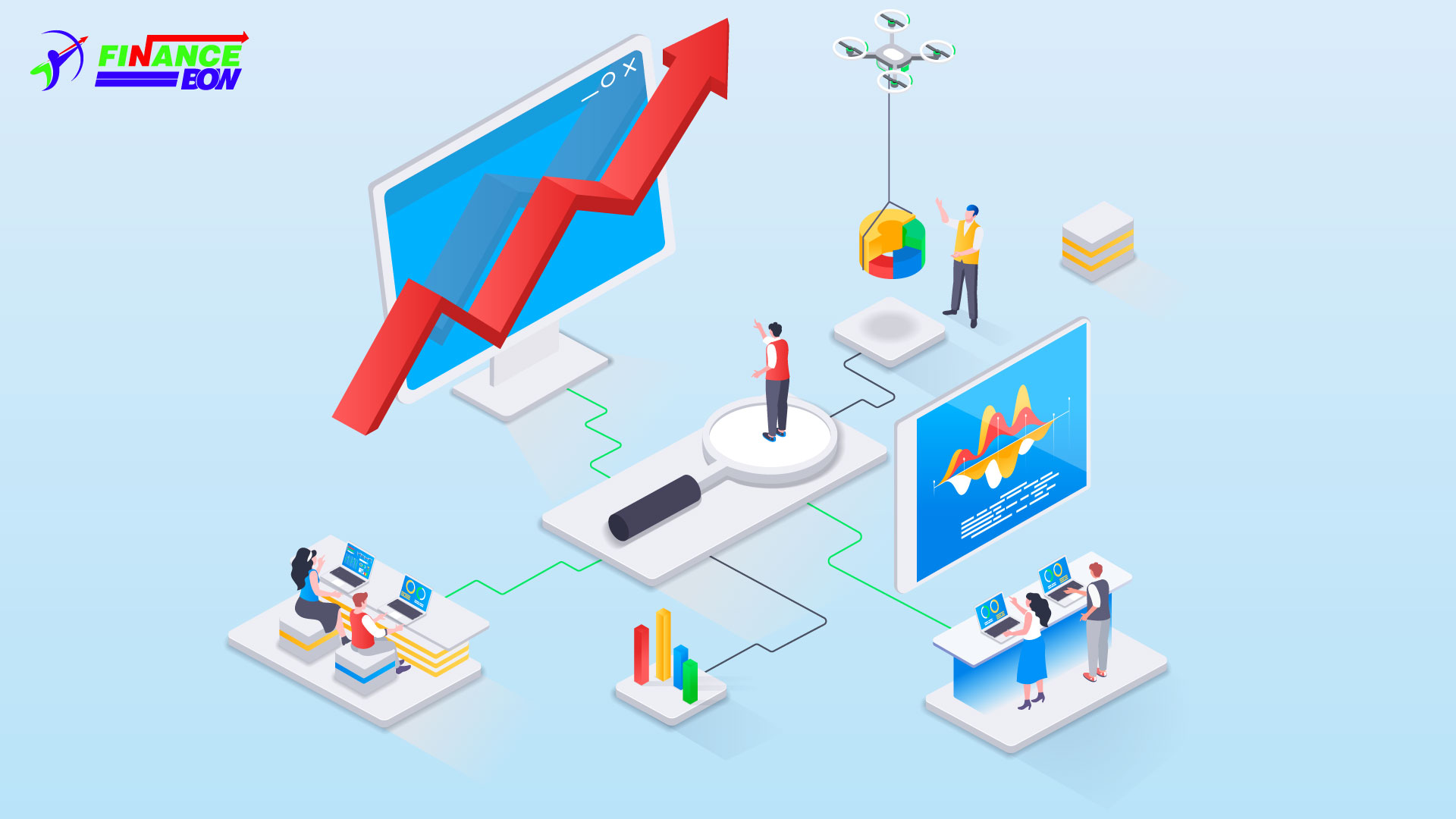
In the past, financial markets were defined by human intuition—traders shouting across exchange floors, reacting to news, and making decisions in real time. Today, that image has largely faded. In its place stands a quieter, faster, and far more complex reality: machines executing trades at speeds no human can match. At the center of this transformation are Algorithmic Trading Systems, powerful tools that have reshaped how Wall Street operates. From hedge funds to independent traders, automation has become a defining force, blending finance with technology in unprecedented ways.
The modern market is no longer just a space for human decision-making—it is a high-speed ecosystem driven by data, logic, and code. As one might observe, “In modern markets, it is not the fastest thinker who wins, but the fastest algorithm.”
What Are Algorithmic Trading Systems?
At its core, an algorithmic trading system is a set of programmed rules that automatically execute trades based on predefined conditions. Instead of relying on a trader to manually buy or sell assets, these systems analyze market data and act instantly when certain criteria are met.
These rules can be simple or highly sophisticated. Some strategies are built around identifying price trends, while others focus on arbitrage opportunities—taking advantage of small price differences across markets. There are also systems designed to provide liquidity, continuously buying and selling assets to keep markets moving smoothly.
A critical component of these systems is the use of quantified market signals. These signals convert raw data—such as price movements, trading volume, or even news sentiment—into actionable insights. The result is a trading process that prioritizes consistency and speed over emotion.
While humans still design and monitor these systems, the execution itself is almost entirely automated. This separation between strategy and action has become one of the defining features of modern finance.
The Rise of Machine-Driven Markets
The transition to machine-driven trading did not happen overnight. It began with the gradual shift from physical trading floors to electronic platforms, where transactions could be processed faster and more efficiently. As computing power increased and financial data became more accessible, algorithmic systems quickly gained traction.
Over time, automation became not just an advantage but a necessity. Markets began to move faster, and traders who relied solely on manual methods found it increasingly difficult to compete. Today, a significant portion of trading activity is carried out by machines, operating across global markets with minimal human intervention.
This transformation has fundamentally changed how markets behave. Price changes that once unfolded over minutes—or even hours—can now occur in fractions of a second. The speed of execution has compressed time itself, creating an environment where decisions are made and acted upon almost instantly.
High Frequency Trading Bots: Speed as Power
Among the most advanced forms of algorithmic trading are high frequency trading bots, often referred to as HFT systems. These bots are designed to execute a massive number of trades in extremely short timeframes, sometimes within microseconds.
The defining characteristic of high frequency trading is its emphasis on speed. Firms invest heavily in cutting-edge hardware and optimized network connections to reduce the delay between receiving information and acting on it. In this environment, even the smallest advantage can lead to significant profits. As the saying goes, “Speed has become the most valuable currency on Wall Street, measured not in seconds, but in microseconds.”
HFT systems can contribute to market efficiency by narrowing price differences and increasing liquidity. However, they have also raised concerns. Rapid, automated trading can sometimes amplify market volatility, leading to sudden and dramatic price swings. Events such as flash crashes highlight the potential risks of relying heavily on machine-driven activity.
Retail Trading Code: Enter the Individual Trader
While algorithmic trading was once dominated by large financial institutions, the landscape has changed significantly. Today, individual traders have access to tools and technologies that were previously out of reach.
Through online platforms, application programming interfaces (APIs), and easy-to-learn programming languages like Python, individuals can now create their own retail trading code. This has opened the door to a new generation of traders who combine financial knowledge with technical skills.
The democratization of trading technology has blurred the line between professionals and amateurs. While institutional players still maintain advantages in resources and infrastructure, retail traders are no longer excluded from the algorithmic space. As one observation captures it well, “What was once the domain of hedge funds is now accessible to anyone with code and curiosity.”
Quantified Market Signals: Data Becomes Strategy
Modern trading systems rely heavily on data, and quantified market signals sit at the heart of this process. These signals are derived from analyzing patterns in financial data, transforming complex information into clear decision-making inputs.
Examples include identifying recurring price movements, measuring trading volume spikes, or analyzing market sentiment through news and social media. By converting these variables into numerical indicators, traders can build models that respond consistently to specific conditions.
This data-driven approach represents a shift away from intuition-based trading. Instead of relying on instinct, traders increasingly depend on measurable patterns and statistical analysis. As a result, “Today’s traders don’t just read the market—they quantify it.”
Risks and Ethical Concerns
Despite its advantages, algorithmic trading is not without challenges. One of the main concerns is the potential for instability. When machines interact with each other at high speeds, unexpected outcomes can arise more quickly than humans can intervene.
There are also questions about transparency. Many algorithmic systems operate as “black boxes,” making it difficult to fully understand how decisions are made. This lack of visibility can complicate efforts to regulate the market and ensure fairness.
Additionally, over-reliance on automation raises broader concerns about control. As one insight highlights, “When machines trade with machines, instability can emerge faster than humans can respond.”
The Future of Algorithmic Trading Systems
Looking ahead, the evolution of Algorithmic Trading Systems is likely to accelerate. Advances in artificial intelligence and machine learning are expected to make these systems even more adaptive and sophisticated.
At the same time, regulators will continue to face the challenge of balancing innovation with stability. Ensuring fair and transparent markets in an increasingly automated environment will require new approaches and frameworks.
Ultimately, the future of trading will be shaped by the interaction between human oversight and machine intelligence. As this relationship evolves, one thing remains clear: “The future of trading lies at the intersection of finance, data, and artificial intelligence.”